
 Eng
 Rus
 Esp
Why hydro-cooling is becoming the new standard in Bitcoin mining and what it means for returns
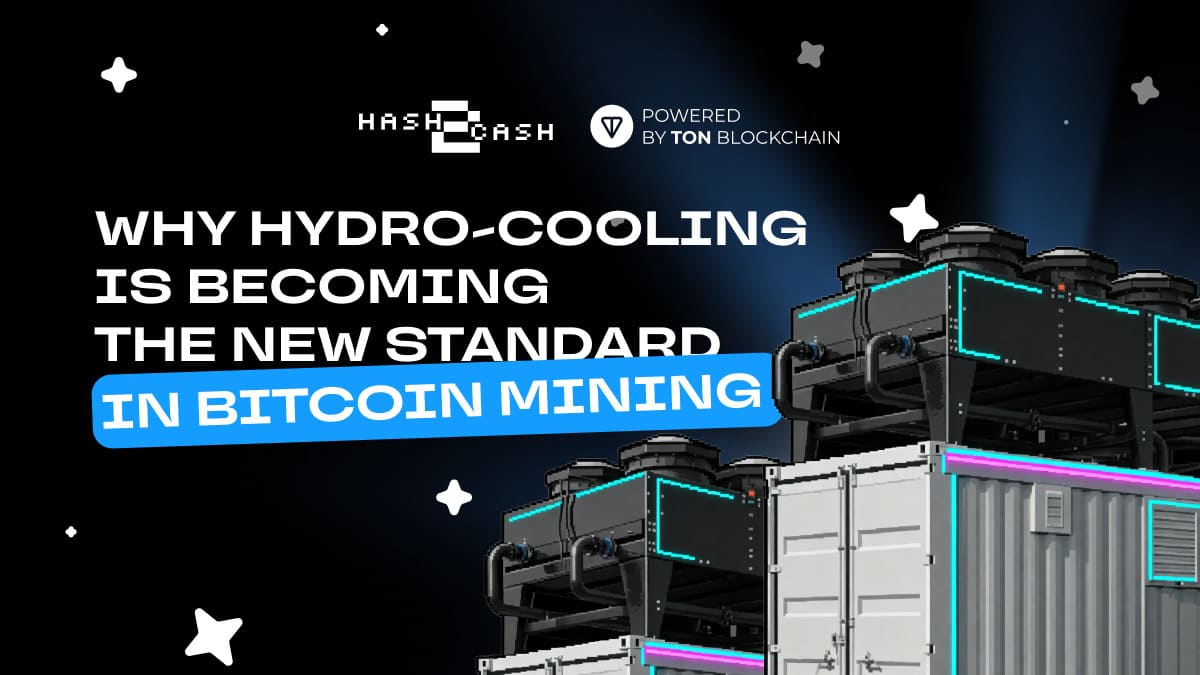
Air-cooled mining is being phased out. Hydro-cooling is faster, quieter, and dramatically more efficient. Here's the data, and why it matters for your mining investment.
The cooling problem in Bitcoin mining
ASIC miners generate enormous heat. A single Bitmain S21 Hydro unit draws up to 5,360 watts - roughly 50 times a standard household light bulb - and converts most of that electricity into heat as a byproduct of computation. Managing that heat is one of the most expensive and technically demanding aspects of running a large mining operation.
For years, the dominant solution was air cooling: rows of industrial fans pushing hot air out of warehouses. It works, but it's noisy, it's inefficient, and it has physical limits. As Bitcoin difficulty grows and miners push hardware harder, air cooling struggles to keep up.
How hydro-cooling works
Hydro-cooling (also called liquid cooling) routes coolant directly through a sealed system in contact with the mining chips, pulling heat away from the hardware far more efficiently than air can. The result is dramatically lower operating temperatures, which translates to:
- Higher sustainable hashrates - chips can run at full capacity without thermal throttling.
- Longer hardware lifespan - lower temperatures reduce chip degradation over time.
- Lower electricity waste - less energy spent on fans and HVAC systems.
- Near-silent operation - a major factor for urban data center deployments.
Industry data: 27% of major mining farms deployed hydro-cooling in 2024. Over 50% of new projects in 2025 use liquid cooling. Projections point to 80% of enterprise mining running on hydro-cooling by 2027.
Why this transition matters for mining economics
The shift to hydro-cooling isn't just a technical upgrade - it reshapes the economics of mining at scale. Operations that complete this transition gain a meaningful cost advantage over air-cooled competitors, especially as Bitcoin network difficulty rises and margins compress.
Hash2Cash's infrastructure is built entirely on hydro-cooling technology, running Bitmain S21 Hydro ASICs across five data centers with a combined capacity of 120 MW and over 50,000 machines. The electricity rate of $0.07/kWh is only achievable at this scale with this cooling approach - air-cooled operations at equivalent scale consistently run higher.
What investors should take away
When evaluating any cloud mining platform, the cooling technology isn't a footnote - it's a core variable in the sustainability of returns. A platform running outdated air-cooled hardware faces rising costs as difficulty increases. A hydro-cooled operation has more room to absorb those cost increases while maintaining payout levels.
The global mining industry's rapid adoption of liquid cooling is being driven by the same economic logic that drives any industrial efficiency upgrade: lower cost per unit of output. For tokenized mining products like H2C, this means the underlying infrastructure is positioned for the next three to five years of Bitcoin network growth - not just the next six months.
The takeaway: Hydro-cooling is no longer a premium feature - it's becoming the baseline for competitive mining operations. Choosing a platform built on this technology means your investment is backed by infrastructure aligned with where the industry is heading, not where it's been.